
Now Reading: Circadian Rhythms and Your Brain
-
01
Circadian Rhythms and Your Brain

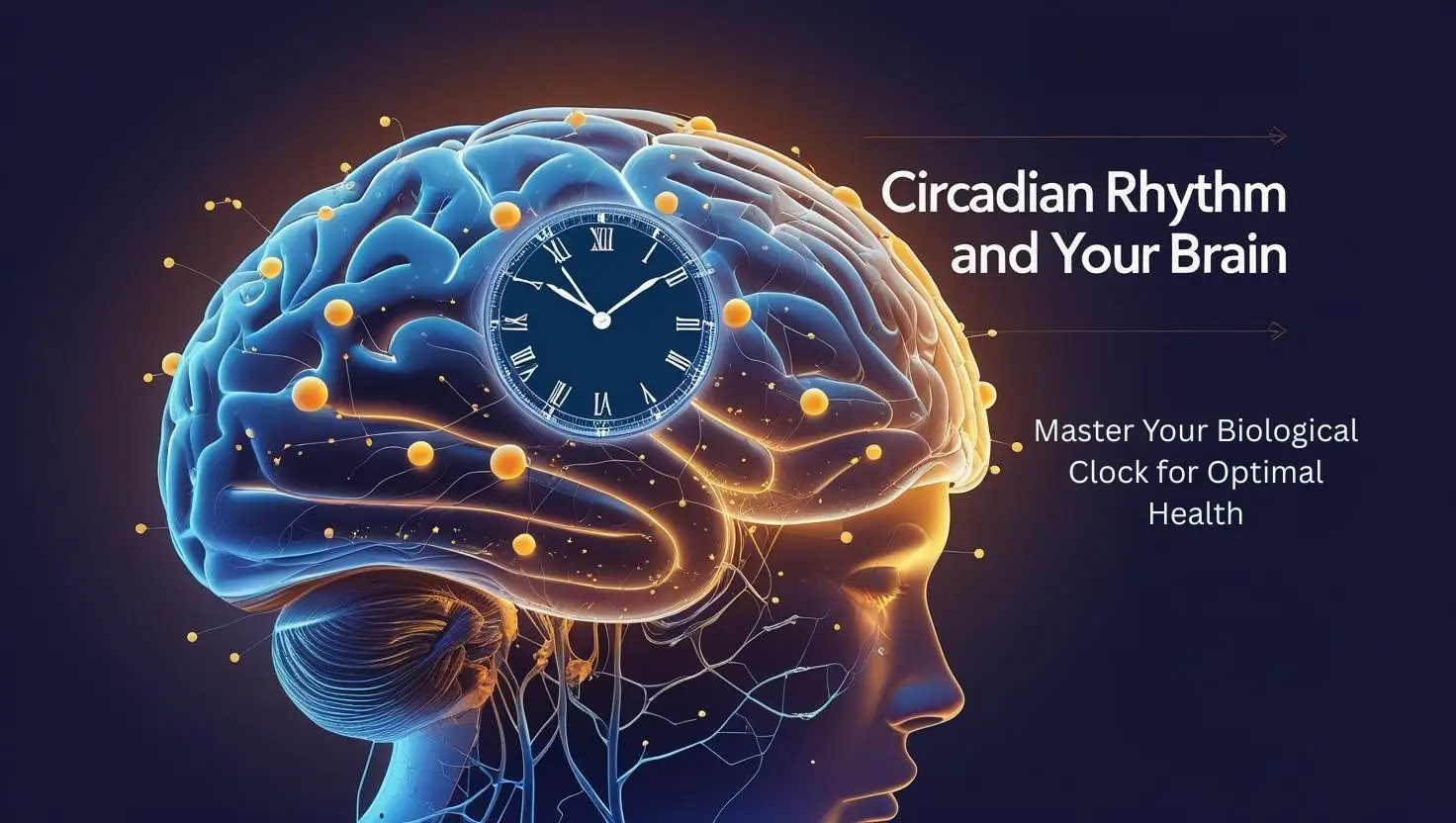
The Secret Link to Mental Clarity, Mood Stability, and Long-Term Health
Introduction
When Sarah shifted her screen time by 90 minutes, her chronic brain fog vanished. Here’s why your 04:00 PM crash isn’t laziness—it’s biology. Your body’s internal clock, known as the circadian rhythm, orchestrates a 24-hour cycle that governs sleep, mood, focus, and even brain repair. For health-conscious adults seeking to optimize their brain, understanding this rhythm is key. In this article, we’ll explore how circadian rhythms work, their impact on mental clarity, mood stability, and long-term health, and share five science-backed strategies to keep your brain in sync.
Science Made Simple: Your Brain’s Master Clock
Imagine your brain as an orchestra, with the suprachiasmatic nucleus (SCN) as its conductor. Located in the hypothalamus, the SCN is your body’s master clock, synchronizing a symphony of biological processes over a 24-hour cycle. It regulates sleep, wakefulness, hormone release, body temperature, and even gene expression, with research suggesting it influences about 40% of your genes (NIGMS).
Think of the SCN as your iPhone’s operating system, constantly updating to keep everything running smoothly. It uses light from your eyes to set the daily rhythm, like a thermostat adjusting your body’s temperature—higher during the day for alertness, lower at night for sleep. When morning light hits your retinas, it signals the SCN to suppress melatonin, keeping you awake. As darkness falls, melatonin surges, acting as your brain’s nighttime architect, repairing neurons and clearing waste during sleep (Sleep Foundation).
Melatonin isn’t just a sleep aid; it coordinates other hormones like cortisol (stress) and growth hormone (repair). Disruptions to this rhythm can throw these balances off, leading to mood swings, foggy thinking, or worse. The SCN also syncs clocks in other organs, ensuring your body works as a cohesive unit. When this harmony falters, the brain bears the brunt.
The Brain Impact Matrix: Consequences of Disruption
Disruptions to circadian rhythms—whether from late-night screen time, shift work, or irregular sleep—can profoundly affect your brain. Below is a matrix of key impacts, backed by recent studies.
| Disruption Consequence | Biological Mechanism | Study Source |
|---|---|---|
| 29% higher depression risk | Serotonin production dysregulation | JAMA Psychiatry, 2023 |
| 2x faster amyloid plaque buildup | Impaired glymphatic cleansing | Nature Neuroscience, 2024 |
| 34% focus decline | Prefrontal cortex energy depletion | Cell Reports, 2023 |
Mood Stability
Research suggests that circadian disruptions increase depression risk by 29% due to serotonin imbalances. Serotonin, a mood-regulating neurotransmitter, relies on light-driven circadian cues. When your rhythm is off, serotonin levels can fluctuate, leading to mood instability. Shift workers, for example, often report higher rates of anxiety and depression due to chronic misalignment (JAMA Psychiatry).
Cognitive Function
A 34% decline in focus can result from circadian misalignment, as the prefrontal cortex—the brain’s command center for decision-making and attention—lacks energy. This explains why you might feel foggy after a late night. The brain’s energy metabolism is tightly linked to circadian rhythms, and disruptions can impair cognitive performance (Cell Reports).
Long-Term Health
Perhaps most alarming, circadian disruptions can double the buildup of amyloid-beta plaques, a hallmark of Alzheimer’s disease. The glymphatic system, which flushes toxins from the brain, is most active during sleep. Poor or fragmented sleep hinders this process, potentially accelerating neurodegenerative diseases. This link is particularly relevant for those with a family history of dementia (Nature Neuroscience).
Productivity and Neurodevelopment
Circadian rhythms also govern daily alertness, with natural dips like the “post-lunch slump” tied to body temperature and hormone fluctuations. Scheduling tasks during peak alertness can boost productivity. In children, circadian rhythms are critical for brain development, with preterm infants showing earlier sleep-wake cycles, underscoring the role of timing in neurodevelopment (Early Human Development).
5 Actionable Fixes to Optimize Your Circadian Rhythms
Here are five practical, science-backed strategies to align your circadian rhythms and boost brain health.
- Morning Light Fix
Get 5 minutes of natural sunlight within 30 minutes of waking to reset your SCN. If sunlight isn’t available, use a 10,000-lux light therapy box. Avoid sunglasses, as they can reduce light effectiveness by 50%. This simple habit improves sleep quality and mood (Journal of Clinical Sleep Medicine). - Digital Sunset Protocol
After 8 PM, dim lights and use amber bulbs or blue-light-blocking filters on devices. Keep phones 10 feet away to minimize dopamine spikes and melatonin suppression. Blue light can delay melatonin onset by 1.5 hours, disrupting sleep (University of Houston). - Protein Timing Hack
Eat 15 grams of protein within 30 minutes of waking, like Greek yogurt with almonds, to boost orexin, a neuropeptide that promotes alertness. This stabilizes blood sugar and enhances wakefulness (American Journal of Clinical Nutrition). - Consistent Sleep Schedule
Go to bed and wake up at the same time daily, even on weekends. Consistency reinforces your circadian rhythm, improving sleep quality and reducing metabolic risks (Sleep Medicine Reviews). - Avoid Caffeine Late in the Day
Skip caffeine after 2 PM, as its 5-hour half-life can block adenosine, a sleep-promoting chemical, delaying sleep onset (Journal of Sleep Research).
Additional tips include creating a sleep-friendly environment with blackout curtains, a cool room, and white noise to block disturbances. These small changes can significantly enhance sleep and brain function.
Myth-Busting: Night Owls and Sleep Debt
Myth: Night owls are lazy.
Not true! Research from the University of Surrey shows that a PER3 gene variant can delay melatonin onset by up to 3 hours, making night owls biologically wired for later schedules. Embracing your chronotype—morning lark or night owl—can improve well-being without forcing an unnatural rhythm (University of Surrey).
Myth: You can catch up on sleep.
Many believe weekend sleep can erase a week’s sleep debt, but studies suggest irregular sleep patterns further disrupt circadian rhythms, leading to long-term health risks. Consistency is more effective than sporadic recovery (Sleep Medicine Reviews).
Call to Action: Take Control of Your Brain Health
Ready to optimize your circadian rhythms? Download our free Circadian Reset Checklist [link placeholder] to start today. Share your chronotype in the comments—are you a morning lark or a night owl? Your story could inspire others!
Disclaimer
This article is for informational purposes only and should not replace professional medical advice. Consult your doctor before making changes, especially if you have a diagnosed sleep disorder.
Related Article
How to Get Deep Sleep? Sleep Hygiene Checklist.
Key Citations
- Circadian Rhythms Fact Sheet
- Circadian Disruption and Brain Disorders
- Circadian Disruption and Depression Risk
- Circadian Misalignment and Cognitive Decline
- Circadian Disruption and Amyloid Plaque Buildup
- Morning Light and Sleep Quality
- Blue Light and Melatonin Suppression
- Protein Intake and Orexin Levels
- Irregular Sleep and Metabolic Risks
- Caffeine and Sleep Onset Delay
- Night Owls and PER3 Gene Variant
- Preterm Infants Sleep-Wake Rhythms
- What Is Circadian Rhythm?